Guided Work Party and Pruning Workshop - July 20th

What a busy and hot day!

Our plants need shade just as much as we do.

Possibly feeble attempt to shade the tomatoes from the extreme heat
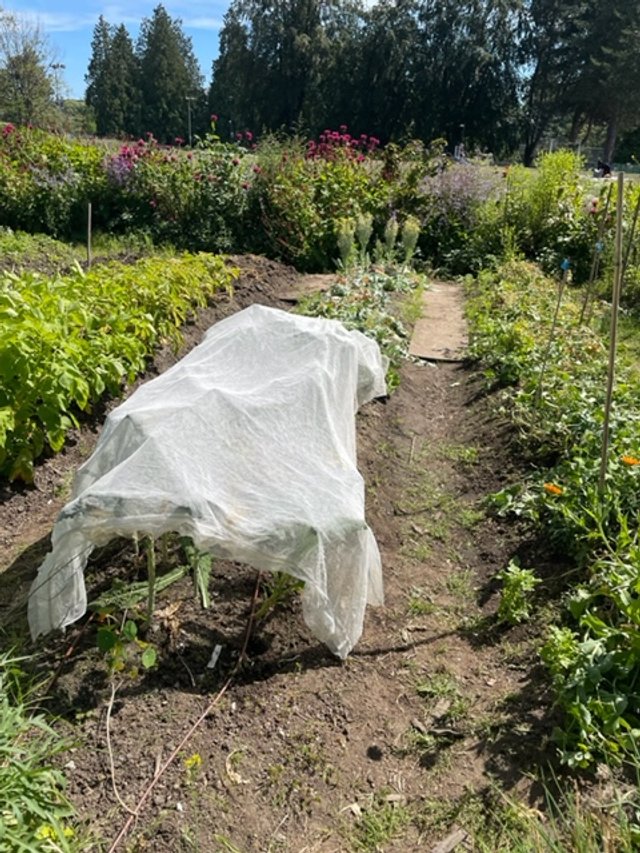
and Kale!

Now is a good time to “edit” out plants in the garden to make space to plant fall crops! In the legume bed we picked the rest of the peas and cut them down, NOT removing the roots, and laid the pea plants down on the soil. This way we leave the organic materials to decompose and give back a bit to the soil, the plants act as mulch, and we don’t disturb the critters and microbes in the soil! 

The sun was unrelenting, so we put up some tents over the veg garden to make things more comfortable while we worked! Lots of weeding and removing grass in this shade. 

The pea vines were cut down and laid on the ground to mulch

Covered work area to shield us from the sun!

After a quick turning of compost, harvesting some lacinato kale, and summer squashes, we had a wonderful lunch from chickpea on main street! So tasty, the Kasum pitas with crispy fried cauliflower, sautéed turmeric-covered mushrooms & onions & lemon garlic sauce were a hit!

Turning compost is such a joyous time~

Pita wrap lunches, yum!

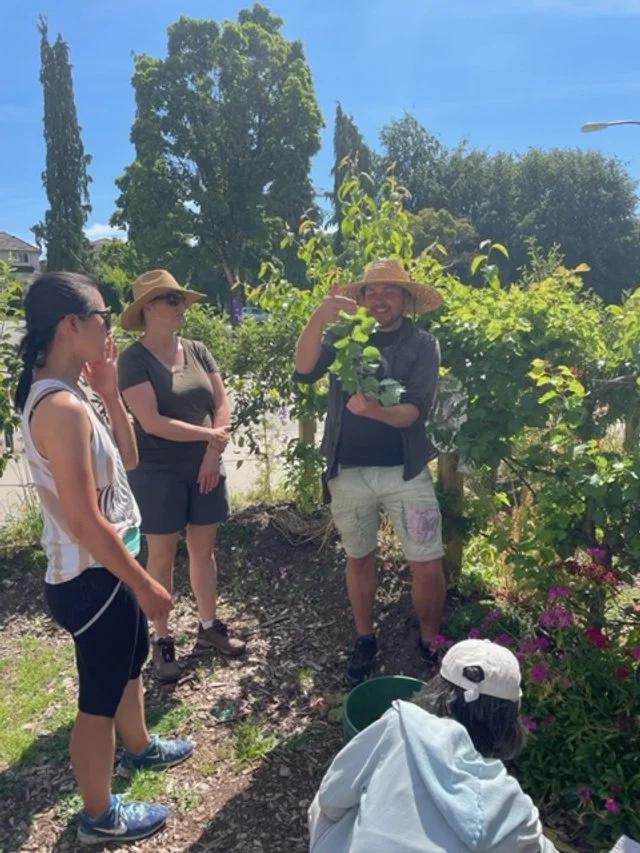
In the afternoon Alex ran a fruit tree pruning workshop! In Alex’s words, the most important take-away is to cut at the collar of the branch to promote healing (see figure 8 and figure 9). Some of Alex’s other tips include:

  • Clean your pruners! Before you start a pruning session, after your pruning session, and after you’ve made a cut on diseased tissues. 

  • The three D’s: Dead, Diseased, or Damaged branches should be removed

  • Your branch might look dead… but it could be alive! Take a small peel of the branch and if you see green, the branch is still alive! If it's fully brown it's probably dead. 

  • July is a good time to prune because of the climate in BC. The dry weather means that there’s reduced risk of fungal infections on new cuts. 

But there was so much more information! Join us in our next workshop~

Jan
Guided Work Party - July 20th

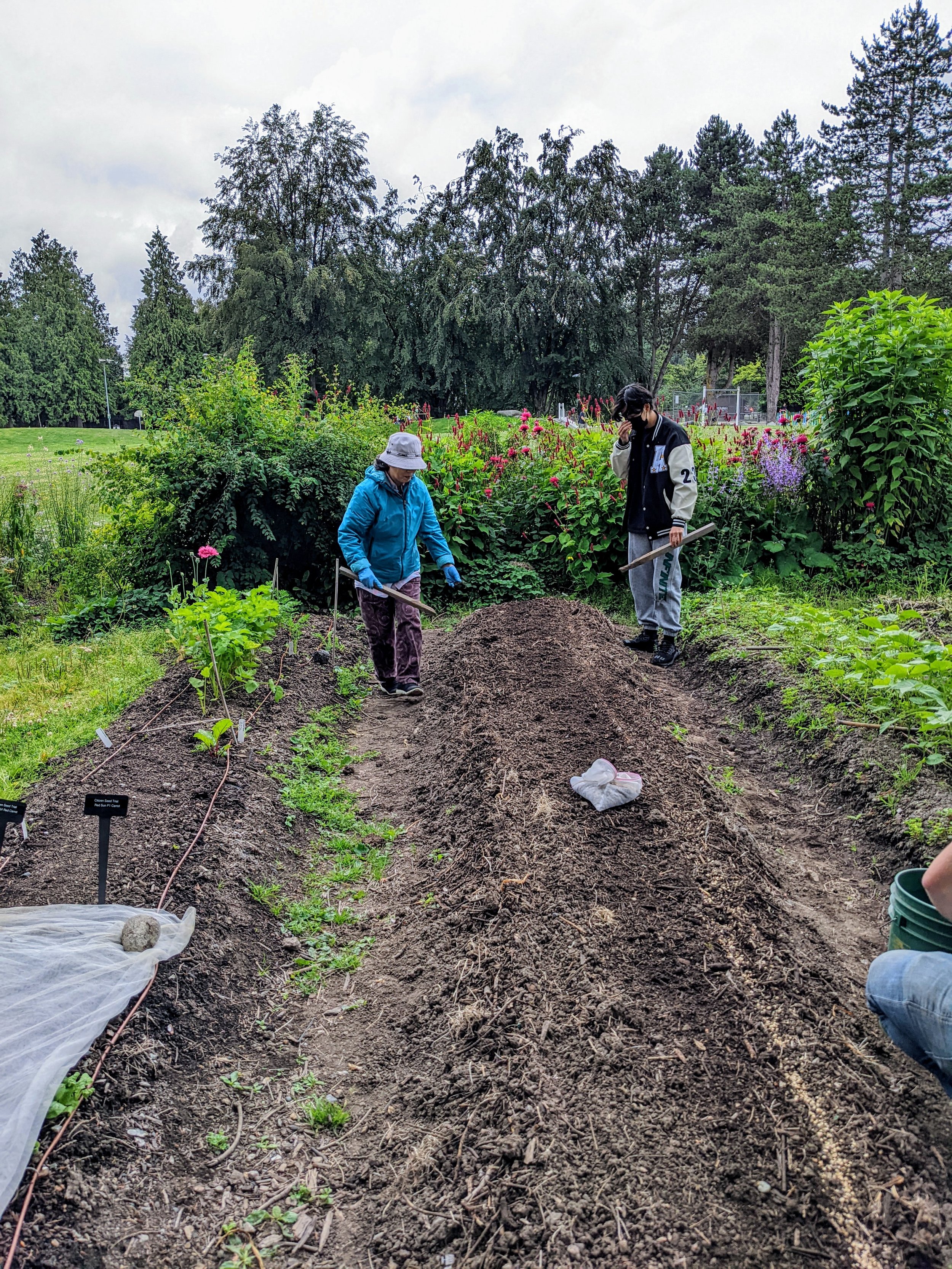
The forecast is looking hot hot hot! Today we learnt from Alex that the germination rate of a seed is directly correlated to the amount of soil particles it comes in contact with. So finer and less clumpy soil does great for the seeds! 

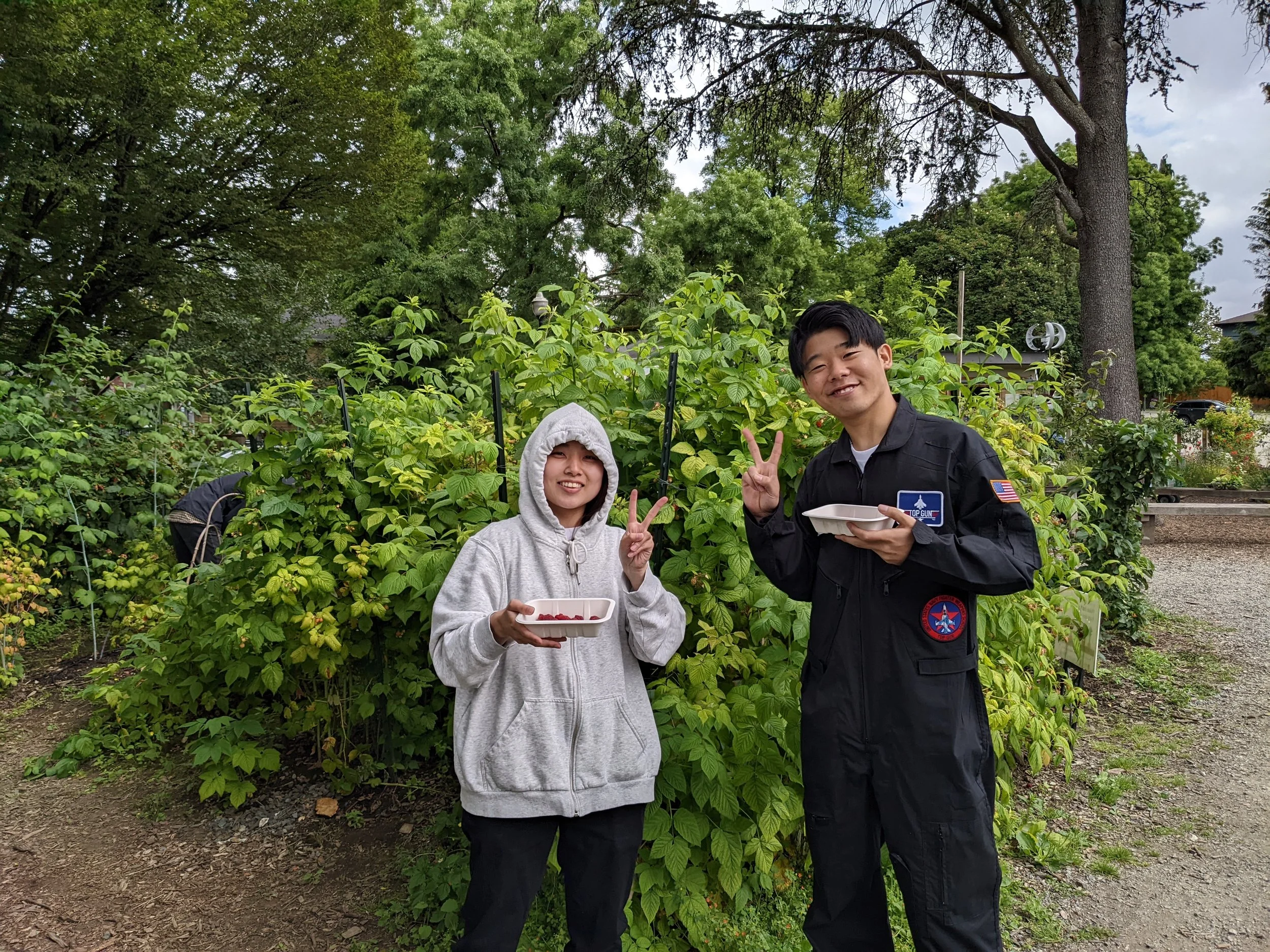
Art dropped by with some black cap raspberries for us to sample. They are native to eastern North America and can often be used as purple dye. Be careful as they can stain!

Angela recruited a few gardeners to turn the compost today. We unveiled the compost from the weeds bin and there was so much! Three barrows full to be exact. The last time this was done was on March 27th, close to 4 months in the making. The compost was spread throughout the woodlands border and the edible forest area.

Several root vegetables were planted today, including the red carrots from the citizen seed trial and different varieties of daikon and radishes. Can’t wait for them to pop up!

In the morning, I brought the gardeners some Asian buns from the seniors event happening in the park. After 2 hours of hard work, lunch of dolmas and fatayer was provided by Silva. For a refreshing beverage, Selina brought fireweed syrup served with cold soda water, find the recipe here.

Guided Work Party - July 17th

This has been a cool La Niña year for sure! Many old and new volunteers helping out today including those from the neighborhood, exchange students from Japan, and students from the north shore who heard about our community gardening! Alex led a walk through the garden beds and talked about how we can plan crops around the weather patterns of the year. This year might not be great for warm weather crops and we might not expect much here in Vancouver, a handful of ground cherries might be the expectation. However, the cool season crops like leeks, lettuce, and peas are still going strong! 

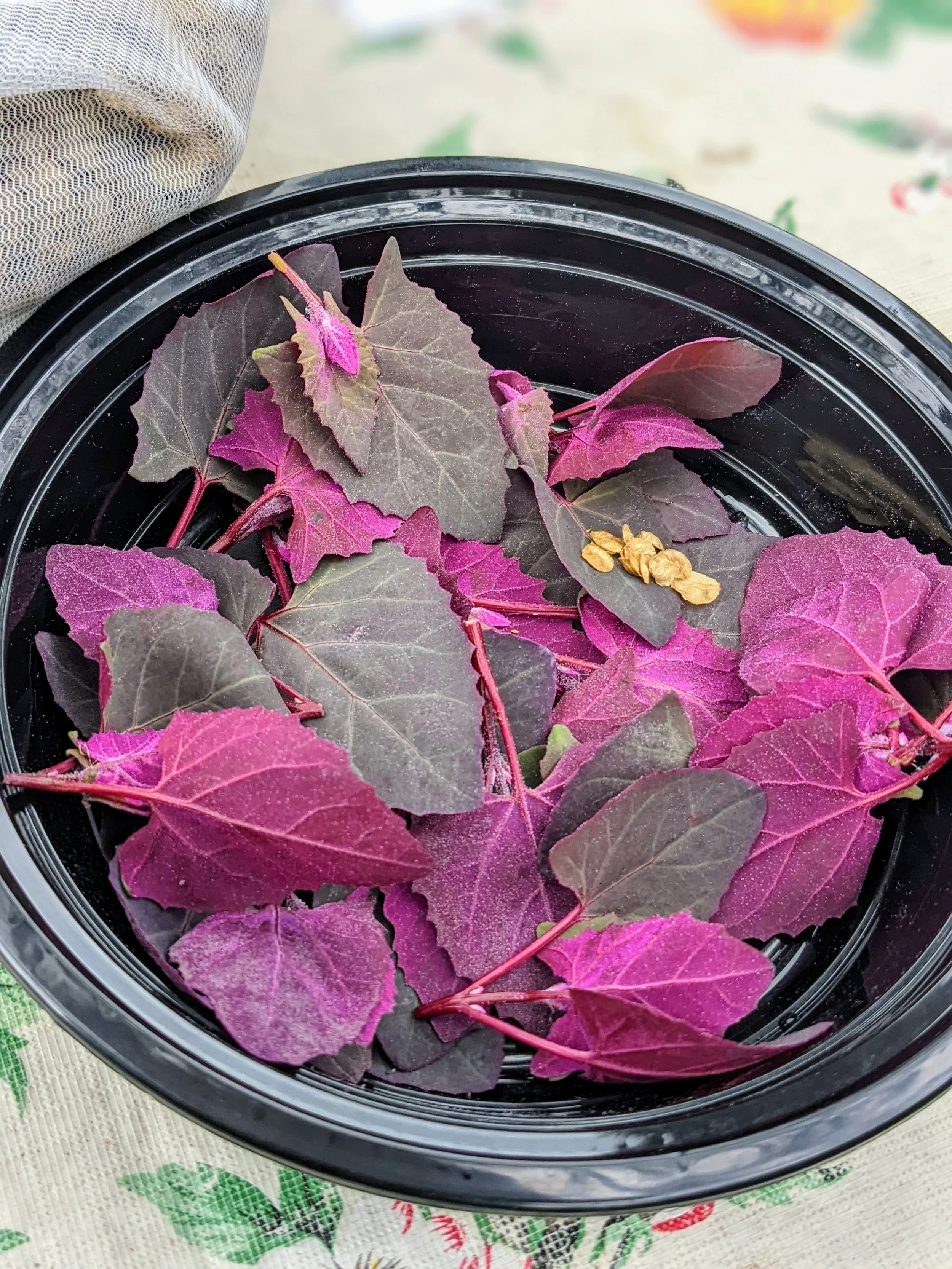
Alex shared some red orach or orache (Atriplex hortensis) seeds which has also been called saltbush or mountain spinach! Red orach is an annual cool season crop that can also be used to draw salt out of soil and has been shown to do so effectively (1): a self seasoning crop. The plants shared were a vibrant purple. This purple color comes from the pigments, anthocyanins, that are great antioxidants with benefits including lowering risks of cancer (2)! 

We also harvested some lacinato kale from the bottom up, leaving some leaves for the plant to keep growing! Raspberries, tayberries, black raspberries, and strawberries were also picked and shared. 

Angela also checked on how the compost was doing, a whooping 30℃! 

Jan

Red mountain spinach and seeds!

Jan explaining what makes Orache red - anthocyanins!

Alex with Red Orache

Weeding tomato bed

Companion planting red mountain spinach in our future garlic patch!

Harvesting berries!